
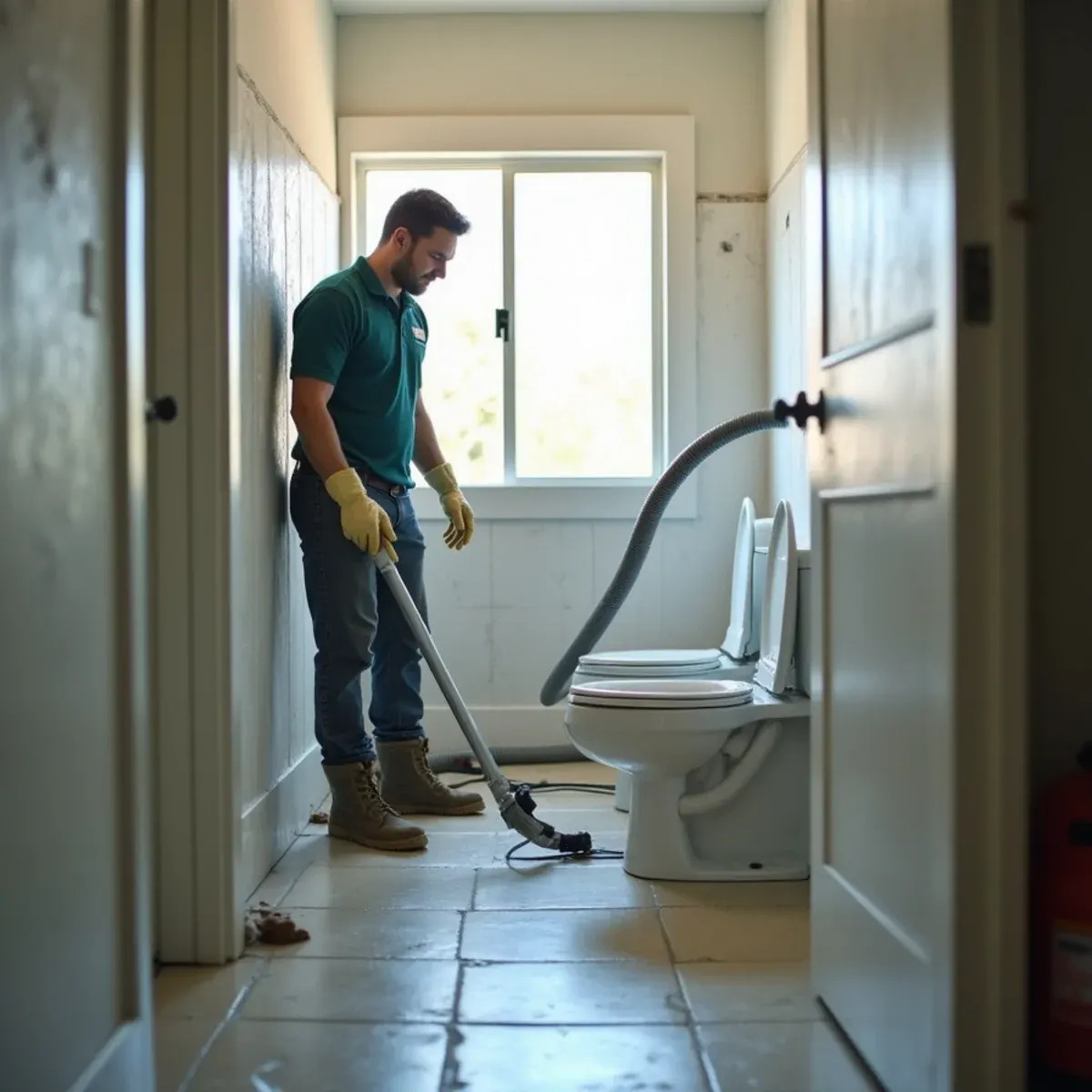
Santa Ana is the oldest city in the county, and the difference shows the moment a toilet overflows in Floral Park, French Park or Washington Square. The walls are lath-and-plaster. The floors are old-growth hardwood milled from timber that is not harvested anymore, so you can match a profile but never the grain or the density. The windows are original wood. None of it comes off a shelf at a supply house, which is why work in these neighborhoods is a drying job first and a demolition job only where material is genuinely beyond saving.
The failure to watch for is plaster key failure, where wet plaster releases from the wood lath behind it and the ceiling under an upstairs bath sags before it ever shows a stain. We meter, support where it is needed, and dry with controlled heat rather than blasting air across a decorative surface. Properties inside the designated historic districts can trigger preservation review on parts of the reconstruction, which affects sequencing and lead times. Santa Ana also holds dense postwar apartment stock where the same overflow is a straightforward multi-unit Category 3 job with none of that complication.
What Santa Ana Changes About Toilet Overflow
1Plaster keys let go before the ceiling stains
Behind a plaster ceiling, wet keys lose their grip on the lath while the visible surface still looks sound. In Floral Park and French Park homes we sound the ceiling and take readings through it rather than judging by appearance, and we shore anything that has started to sag. Losing an original plaster ceiling to a missed inspection is not a repair, it is a replacement with something lesser.
2Old-growth hardwood earns the drying attempt
The tight-grain fir and oak in these houses is denser than anything milled today and it releases moisture slowly, so it needs patient drying rather than aggressive heat. Given a fast start and Category 1 or 2 water, cupped boards will often flatten enough to refinish. We will tell you honestly when sewage has soaked in far enough that replacement is the only defensible call.
3Historic review affects reconstruction sequencing
Inside the designated districts, some of the reconstruction that follows a Category 3 tear-out runs through preservation review. That is not a reason to delay emergency mitigation, which happens immediately, but it does change the timeline for putting things back. We separate the two phases in our scope so your carrier sees mitigation and rebuild as the distinct tracks they actually are.
How the Work Runs
The method is the same one we use on every toilet overflow job, documented to the IICRC S500:2025 standard. Here it is in short — the full toilet overflow cleanup process explains each stage in detail.
- Stop the water, stabilize the room
- Determine the category before scoping
- Extract, then remove only what must go
- Pull the toilet, inspect the flange
- Dry the subfloor and the ceiling below
- Disinfect to category, verify, reset
The Santa Ana Background Worth Knowing
Lath and plaster is wood strips nailed across the studs with several coats of plaster troweled over them. The plaster that squeezes through the gaps between lath forms keys that hook over the wood and hold the whole wall in place. That construction is why plaster walls last a century — and why they behave so differently from drywall when wet.
There is more on the housing stock, drainage and plumbing history of this city on our water damage restoration in Santa Ana page.
Santa Ana at a glance
- Dominant construction era
- 1900–1970
- Foundation type
- mixed on grade
- Supply piping found here
- original early-century piping, galvanized steel, copper
- Drain line materials
- cast iron, clay
- Terrain and water table
- flat, moderate water table
- Most common local failure
- plaster key failure, where wet plaster softens and releases from the wood lath holding it to the wall
- Highest-value local prevention
- starting aggressive drying within hours on any plaster loss — waiting is the one thing that costs you the wall
What It Costs in Santa Ana
We do not quote a number over the phone before seeing the property — anyone who does is guessing. The variables that actually move the price on a toilet overflow job are the category of the water, how far it traveled from the base, what your floor is built from, and they are broken down in full on the toilet overflow cleanup page. The assessment and the written estimate are free anywhere in Santa Ana, day or night, with no obligation.
Toilet Overflow Questions from Santa Ana Homeowners
Not automatically. Plaster in a Santa Ana historic home holds far more water than drywall, but it also survives a wetting that would destroy drywall, provided the keys behind the lath are still gripping. We sound it, meter through it and dry it under controlled conditions. Removal becomes the answer when the keys have released, when the ceiling is sagging, or when the water was a sewage backup that soaked the plaster through.
Clear water lowers the health risk, not the drying requirement. Clean water still soaks into carpet pad, particle board, and the cut edge of subfloor around the flange, and it still causes swelling and mold growth if it stays. What clean water does change is the scope: no containment, no PPE, usually no demolition. If it stayed on sealed tile and you got it up quickly, you may genuinely be fine. If it reached anything porous, it needs real drying.
Three checks. Did the water rise in the bowl without anyone flushing it? Does another fixture gurgle, drain slowly, or fill up when you run water elsewhere in the house? Is there visible soil or a sewer odor in what came out? Any one of those points at the main line. A stuck fill valve, by contrast, gives you clear water, a bowl that overflows steadily, and a tank you can hear running continuously.
Usually, if drying starts quickly. Plaster holds much more water than drywall and dries far more slowly, so it needs more equipment and often desiccant dehumidification. The risk is the plaster keys softening and releasing from the lath, which is why waiting is the one thing that genuinely costs you the wall.