
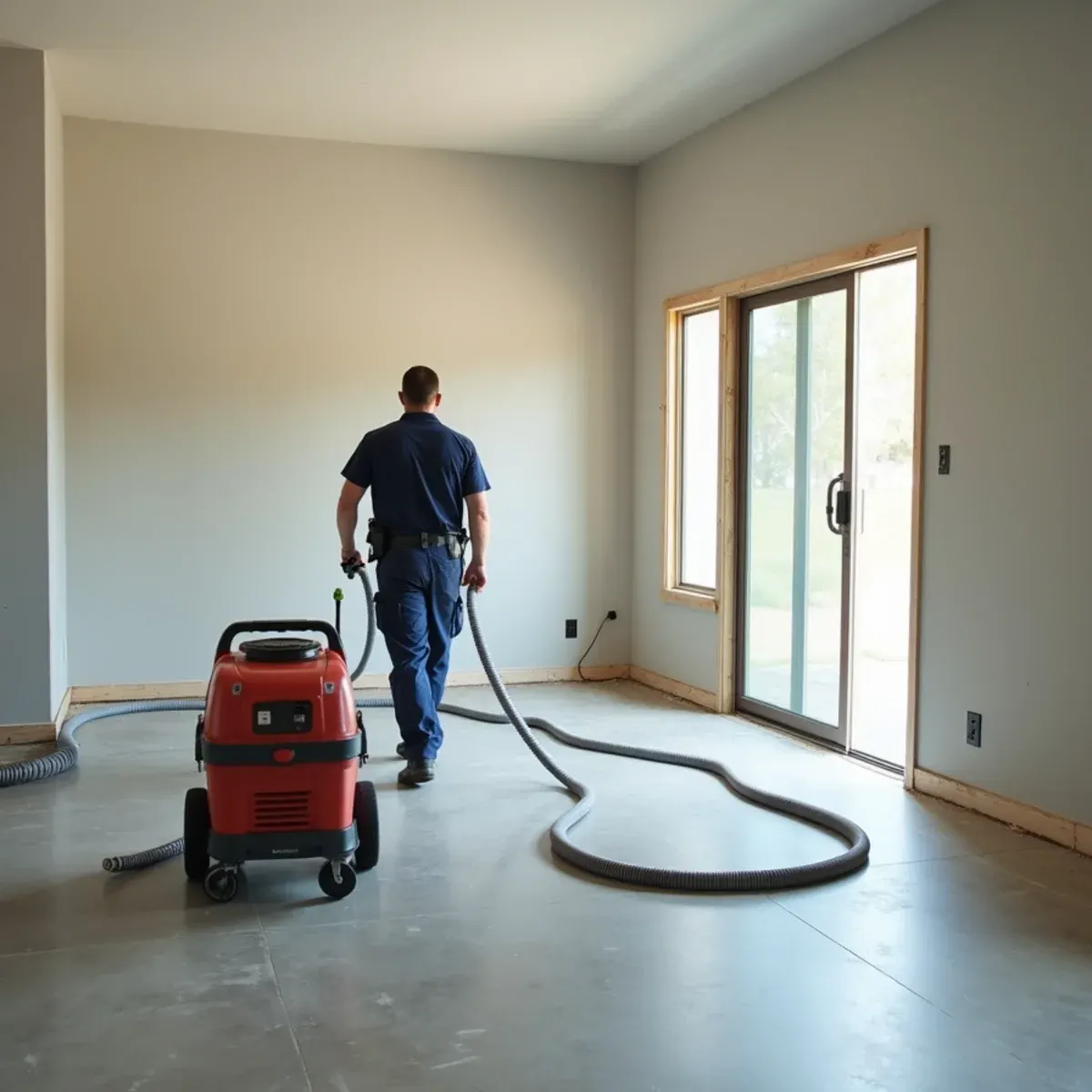
Los Alamitos was built straight through the changeover from raised floors to slab, and that one fact decides where an odor is living. On the older raised-floor blocks the smell settles into crawlspace soil, joists and the underside of the subfloor, and it keeps feeding the rooms above no matter how long equipment runs upstairs. On the slab-built houses a few streets over, the same odor sits in flooring adhesive and the bottom plate. We are a few minutes west on the same Katella, so we can look before anyone quotes.
A lot of what we deodorize here starts at the sewer lateral. Cast iron and clay lines run under decades-old parkway trees, roots find the joints, and a backup pushes residue into places nobody sees: under the tub, around the toilet flange, into crawlspace dirt. That residue is the odor. The medical and dental suites along Katella are a different job entirely. They cannot close, and ozone is not an option anywhere staff or patients are present, so source removal and hydroxyl treatment get scheduled around the appointment book.
What Los Alamitos Changes About Odor Removal
1Crawlspace dirt holds the smell
On the raised-floor blocks, odor does not stay in the room. It drops into the crawlspace, soaks the soil and the underside of the subfloor, and feeds back up through the floor for months. Fans in the living room accomplish nothing against that. We get under the house, remove contaminated soil and debris, clean the joists and framing, then treat the crawlspace itself before anything upstairs is sealed.
2Root-split laterals under the parkway trees
The old cast iron and clay laterals here run directly beneath mature street trees. Roots find the joints, the line backs up, and sewage residue ends up under the tub, around the flange and in framing nobody sees. Deodorizing before that lateral is scoped and the residue is physically removed is money spent twice. We camera the line first, clean second, treat last.
3Medical suites on Katella cannot close
The offices near Los Alamitos Medical Center run full appointment books, and ozone is off the table anywhere staff or patients are present. We build containment, do the cutting and source removal after hours, and run hydroxyl generators that are safe in occupied space. That is slower than clearing a building overnight, and we give you the realistic timeline before you start moving patients.
How the Work Runs
The method is the same one we use on every odor removal job, documented to the IICRC S500:2025 standard. Here it is in short — the full odor removal & deodorization process explains each stage in detail.
- Locate the residue
- Remove what holds it
- Clean the surfaces that stay
- Filter the air while we work
- Seal only what cannot be cleaned
- Treat the air, then verify
The Los Alamitos Background Worth Knowing
When a home has been standing since 1958, the plumbing question is not whether something will fail but which thing already has. We routinely find three generations of repair inside a single Los Alamitos wall: original galvanized, a copper section from a 1980s repair, and a PEX patch from last decade, all joined with whatever transition fitting was on the truck that day.
There is more on the housing stock, drainage and plumbing history of this city on our water damage restoration in Los Alamitos page.
Los Alamitos at a glance
- Dominant construction era
- 1950–1965
- Foundation type
- mixed on grade
- Supply piping found here
- galvanized steel, early copper, mixed-metal repair joints
- Drain line materials
- cast iron, clay
- Terrain and water table
- flat, moderate water table
- Most common local failure
- galvanic corrosion at mixed-metal joints where sixty years of piecemeal repairs meet
- Highest-value local prevention
- a camera inspection of the sewer lateral, which has never been scoped on most homes here
What It Costs in Los Alamitos
We do not quote a number over the phone before seeing the property — anyone who does is guessing. The variables that actually move the price on a odor removal job are how much material comes out, where the residue ended up, the type of odor involved, and they are broken down in full on the odor removal & deodorization page. The assessment and the written estimate are free anywhere in Los Alamitos, day or night, with no obligation.
Odor Removal Questions from Los Alamitos Homeowners
The residue, almost always, rather than the water. If your house has a raised floor, the source is often crawlspace soil or the underside of the subfloor, which nothing that ran inside the house ever touched. On a slab home it is usually flooring adhesive or the bottom plate. Once humidity climbs again, that residue starts producing odor again. We locate the source, remove it physically, and only then treat the air.
It may mask it for a few weeks. Rental units are usually undersized for a whole structure, and they treat air rather than the material producing the odor. They also should not run with anyone home, and long heavy cycles can degrade rubber seals, leather, and paint sheen. If the residue sits in a wall cavity or under the flooring, no amount of ozone reaches it.
Because residue was left somewhere. That is the answer nearly every time. The usual spots are attic insulation, the inside of flex duct, the wall cavity behind drywall that was replaced but never cleaned, the subfloor under new flooring, and the back of a cabinet run. Drying a structure to standard does not remove residue, so a job dried correctly can still smell if cleaning stopped at visible surfaces.
Usually fifteen to twenty-five minutes — Los Alamitos is our closest neighbor, straight east on Katella from where our trucks stage. The 60-minute response commitment applies here the same as in Cypress.