
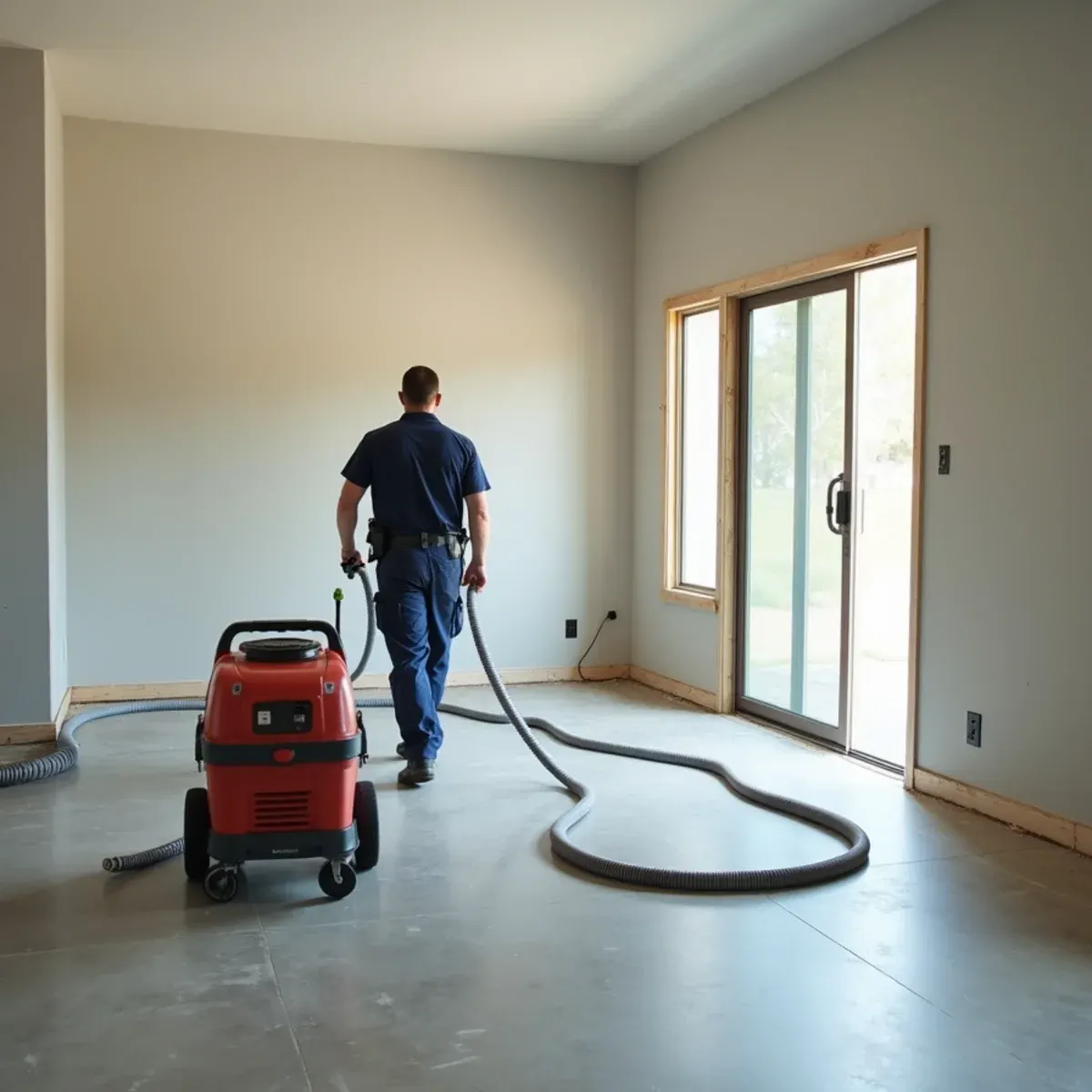
Give us a Rossmoor address and we can usually sketch the floor plan before we arrive. About 3,500 homes went up here between 1957 and 1961, all Cortese, all single-story, all built to a short list of plans. That repetition is the single biggest advantage this service has anywhere in our area. We have traced odor through enough of these houses to know which wall the water runs toward, where the hall bath drain line turns, and which corner of the slab holds moisture longest after everything else reads dry.
The other Rossmoor constant is the flooring. Many of these houses still have their original oak strip laid over the slab, and in plenty of them it has been under carpet since the seventies. Wet oak sitting on old mastic gives off a sharp, sour smell that people usually blame on the carpet pad. Pull the carpet and the odor doubles. That is your source. Whether the oak can be dried and saved or has to come up is a decision we make with a meter, not an opinion.
What Rossmoor Changes About Odor Removal
1Original oak over slab holds odor
Oak strip laid directly over a slab has almost nowhere to release moisture downward, so it holds it, and the mastic underneath sours along with it. Sealing the surface traps the smell instead of ending it. We read moisture through the boards, dry from the edges and from below where access allows, and only recommend removal when the wood has cupped past recovery.
2Same plans, same wet corners
Because these homes were built in four years to a handful of layouts, the failure points repeat. Hall bath, kitchen wall, the slab edge near the slider. Knowing that means less exploratory demolition and a faster path to the residue actually producing the smell. It also means we can tell you early what the job realistically involves rather than discovering it on day three.
3County permits, not a city counter
Rossmoor is unincorporated, so structural repairs go through the County of Orange rather than a city building department. Owners are often surprised by that, and contractors unfamiliar with the neighborhood sometimes send paperwork to the wrong desk and lose a week. We handle the filing on the repair side and keep the drying and deodorization documentation lined up with it.
How the Work Runs
The method is the same one we use on every odor removal job, documented to the IICRC S500:2025 standard. Here it is in short — the full odor removal & deodorization process explains each stage in detail.
- Locate the residue
- Remove what holds it
- Clean the surfaces that stay
- Filter the air while we work
- Seal only what cannot be cleaned
- Treat the air, then verify
The Rossmoor Background Worth Knowing
Plumbing failure is largely a function of time, water chemistry, and installation method — and in Rossmoor all three are effectively identical from house to house. That is why leak calls here tend to arrive in clusters, and why a neighbor's slab leak is genuinely relevant information about your own home.
There is more on the housing stock, drainage and plumbing history of this city on our water damage restoration in Rossmoor page.
Rossmoor at a glance
- Dominant construction era
- 1957–1961
- Foundation type
- slab on grade
- Supply piping found here
- under-slab copper, some galvanized
- Drain line materials
- cast iron
- Terrain and water table
- flat, moderate water table
- Most common local failure
- clustered slab leaks, where one failure on a street reliably predicts the neighbors
- Highest-value local prevention
- treating a neighbor's slab leak as information about your own house and running the meter test
What It Costs in Rossmoor
We do not quote a number over the phone before seeing the property — anyone who does is guessing. The variables that actually move the price on a odor removal job are how much material comes out, where the residue ended up, the type of odor involved, and they are broken down in full on the odor removal & deodorization page. The assessment and the written estimate are free anywhere in Rossmoor, day or night, with no obligation.
Odor Removal Questions from Rossmoor Homeowners
Often yes, if we get to it early. Oak that is damp but still flat usually dries and stops smelling once the mastic beneath it is dried too. Oak that has cupped, crowned or separated at the seams has taken water into the mastic bond, and that odor comes back every humid week no matter what gets applied on top. We meter several boards across the wet area before recommending either path.
It may mask it for a few weeks. Rental units are usually undersized for a whole structure, and they treat air rather than the material producing the odor. They also should not run with anyone home, and long heavy cycles can degrade rubber seals, leather, and paint sheen. If the residue sits in a wall cavity or under the flooring, no amount of ozone reaches it.
Because residue was left somewhere. That is the answer nearly every time. The usual spots are attic insulation, the inside of flex duct, the wall cavity behind drywall that was replaced but never cleaned, the subfloor under new flooring, and the back of a cabinet run. Drying a structure to standard does not remove residue, so a job dried correctly can still smell if cleaning stopped at visible surfaces.
Because they were all built between 1957 and 1961 with the same materials and methods. Copper routed through a slab fails from internal erosion and external soil corrosion on a fairly predictable timeline, and when an entire community shares one construction date, it shares one failure window too.