
Pico Rivera occupies a strip of ground between two flood-control channels — the San Gabriel River on one side, the Rio Hondo on the other — and that position defines how moisture behaves in every house here. The water table sits high. During a sustained storm the ground saturates fast and stays saturated, and the 1945-to-1965 slabs across the Rivera district and North Pico Rivera were poured in an era when an under-slab vapor retarder was not standard practice. Moisture moves up through that concrete continuously, and most of the year it evaporates off and nobody notices.
Then someone installs vinyl plank, sheet vinyl or a sealed floor finish over it. Now the vapor has nowhere to go. It condenses at the underside of the covering, the adhesive and pad stay damp, and growth develops on a surface no one will look at for years. That's a common Pico Rivera mold call and it has nothing to do with a leak. The city also has the usual galvanized and cast-iron failures of its age. We're about twenty-one minutes south in Cypress and dispatch as fast as conditions allow.
What Pico Rivera Changes About Mold Remediation
1Slab vapor under sealed flooring
On a 1950s slab with no vapor retarder beneath it and a high water table under that, moisture drive upward is constant. Cover the slab with something impermeable and you've built a condensation plane. We test slab moisture before anyone talks about reinstalling flooring, because putting the same covering back over an untreated slab restarts the clock immediately.
2Storm saturation between the channels
When the ground between the San Gabriel and the Rio Hondo takes days of rain, soil moisture against foundations climbs and stays up. Growth that appears at the bottom of exterior walls in February often traces to that, not plumbing. Clearing area drains and getting downspouts discharging well away from the foundation is the practical local prevention, and it matters more here than in most cities we serve.
3Original galvanized in postwar tract
Plenty of houses in the Rivera district still carry their original galvanized supply lines, now seventy years old and thinning from the inside. Those seep rather than burst, feeding a wall cavity slowly enough that odor is the first symptom. When we open a wall and find that pipe, we say so — replacing the fitting alone on a run that age tends to buy you a short reprieve.
How the Work Runs
The method is the same one we use on every mold remediation job, documented to the IICRC S500:2025 standard. Here it is in short — the full mold remediation & removal process explains each stage in detail.
- Inspection and moisture source identification
- Testing where it is warranted
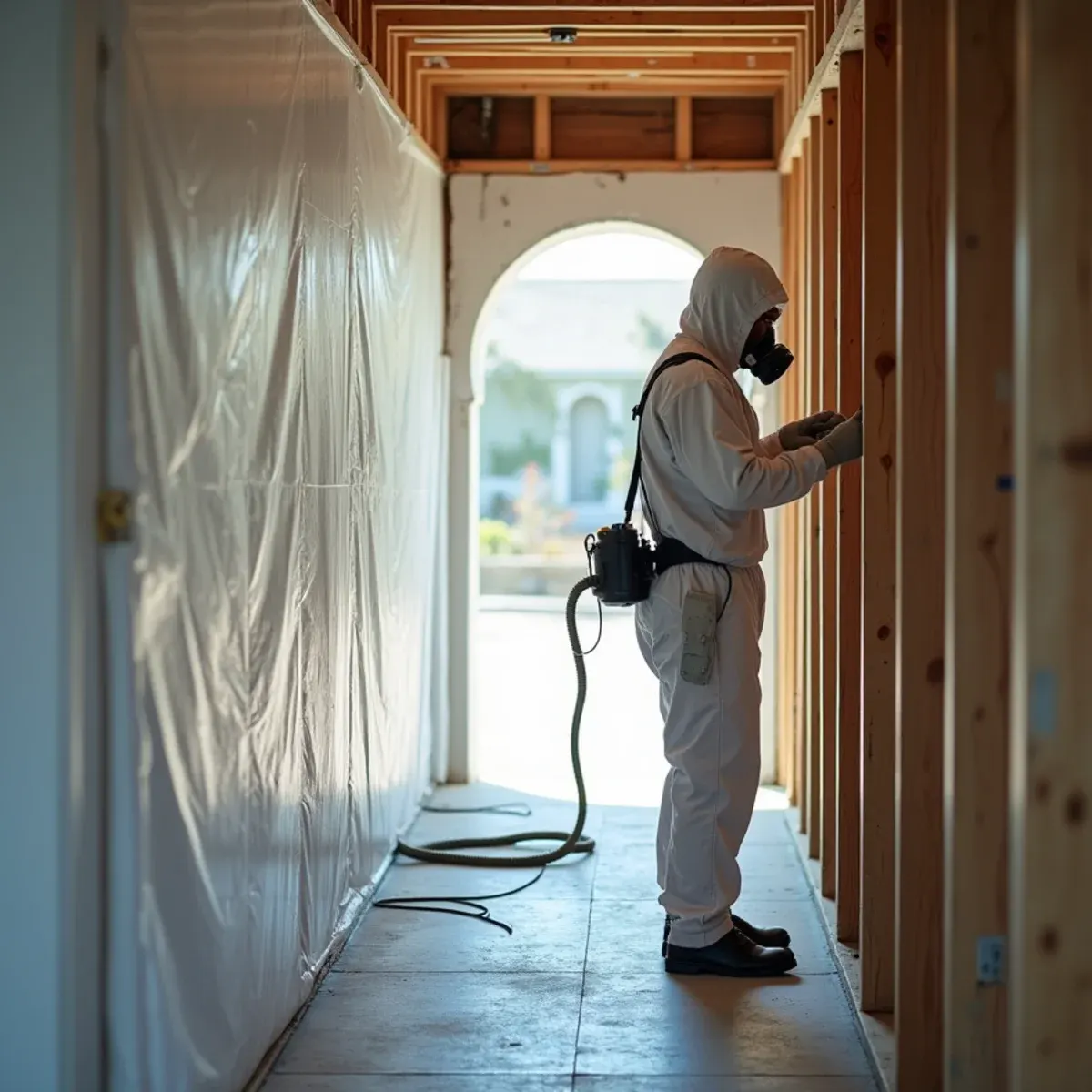
- Containment and negative pressure
- Removal of contaminated material
- HEPA cleaning and antimicrobial application
- Verification before containment comes down
The Pico Rivera Background Worth Knowing
On a hillside, storm water leaves. In Pico Rivera it soaks in, and when the soil is already near capacity it stops soaking in and simply stands. That is why a yard here can hold water two days after the rain stops while a yard up in the Whittier hills is dry by morning. The lawn is not draining badly. The ground underneath it is full. Once that happens, every path water can take toward your house becomes the path it takes: the garage threshold, the slider track, the gap where a patio slab has settled back toward the wall.
There is more on the housing stock, drainage and plumbing history of this city on our water damage restoration in Pico Rivera page.
Pico Rivera at a glance
- Dominant construction era
- 1945–1965
- Foundation type
- slab on grade
- Supply piping found here
- original galvanized steel, copper
- Drain line materials
- cast iron
- Terrain and water table
- flat, shallow water table
- Most common local failure
- ground saturating fast during sustained storms because the water table between two channels sits high
- Highest-value local prevention
- clearing area drains and confirming downspouts discharge well away from the foundation
What It Costs in Pico Rivera
We do not quote a number over the phone before seeing the property — anyone who does is guessing. The variables that actually move the price on a mold remediation job are square footage of affected material, where it is, containment complexity, and they are broken down in full on the mold remediation & removal page. The assessment and the written estimate are free anywhere in Pico Rivera, day or night, with no obligation.
Mold Remediation Questions from Pico Rivera Homeowners
That's a common one in Pico Rivera. Your slab was likely poured without a vapor retarder, and with the water table between the two channels sitting high, moisture moves up through the concrete year round. An impermeable floor covering traps it underneath, and the adhesive and underlayment stay damp enough to support growth. Removal is only half the answer. The slab needs testing and, depending on the numbers, a moisture mitigation coating or a vapor-open flooring choice before you re-cover it.
On a hard, non-porous surface like tile or glass, bleach handles surface growth. On drywall, wood, or anything porous it does not — the water content soaks in and can feed further growth while the chlorine stays on the surface. Porous material with real growth needs to be removed, not treated.
Usually not for visible growth with an obvious cause — you can see the problem and the work would be identical regardless of species. Testing is worthwhile when there is odor but nothing visible, when you need documentation for a claim or dispute, or when you want independent verification that the job was done right.
Not in the way people picture it. The channels are engineered, and what we actually see is a groundwater and surface drainage problem rather than a channel overtopping. Because the water table between the two runs high and the ground is flat, soil here reaches saturation faster than it does a few miles inland. Once it does, storm water stops soaking in and starts looking for the lowest opening in your house, which is almost always the garage.