
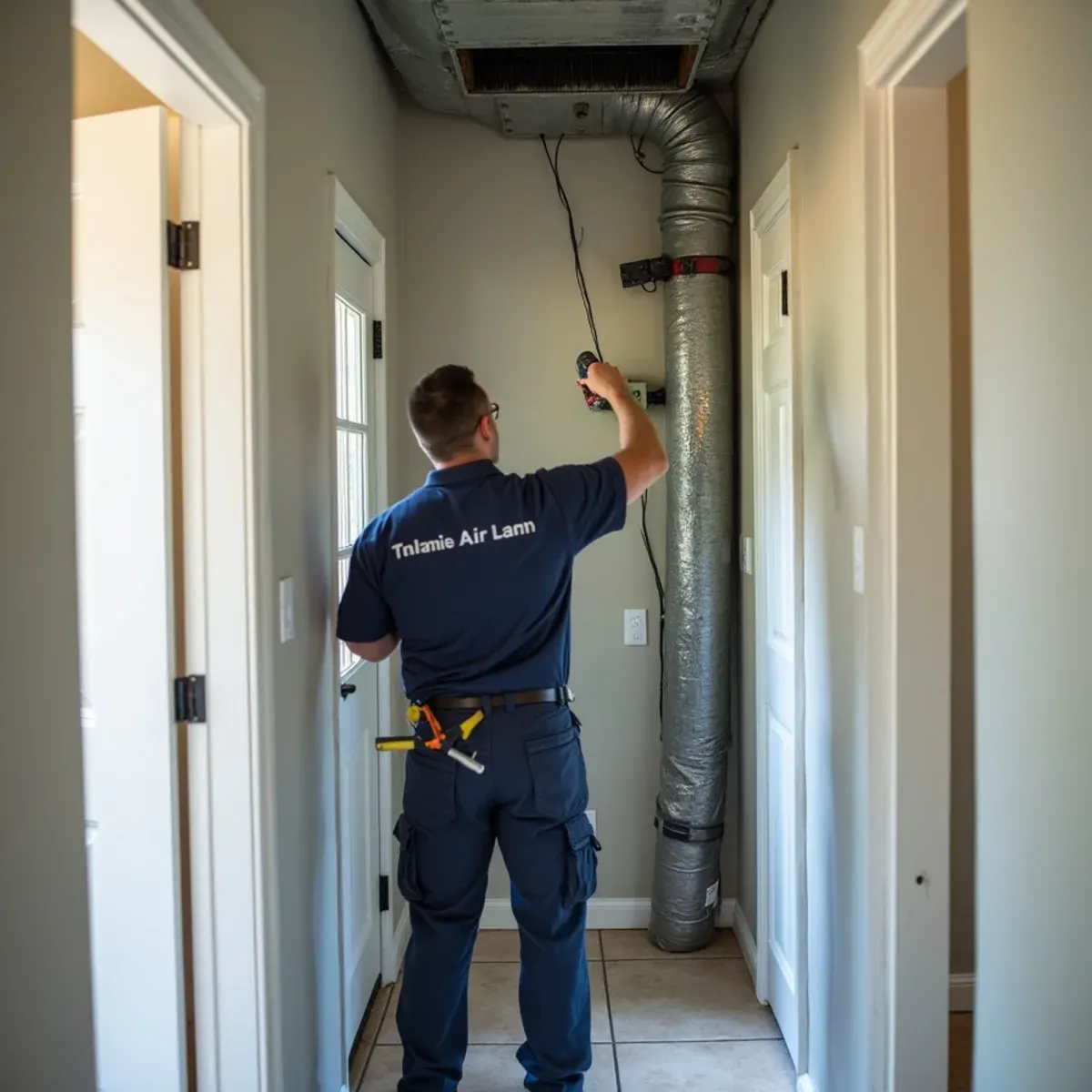
In Paramount you can work a house and a shop on the same block in the same afternoon. The city grew out of the old Hynes and Clearwater dairy communities and filled in tight — housing packed between commercial corridors, very little permeable ground, and the Los Angeles River channel along the western edge. A residential call here means attic flex over a small postwar slab house with a hall-closet air handler. The commercial call sixty feet away means a rooftop packaged unit, a curb, and duct dropped through a metal deck into a suspended ceiling.
The industrial density also shows up inside the equipment. Systems in this part of town carry a heavier baseline load of road and industrial particulate than they would a few miles east, so filters are dirtier and coils are more fouled before anything goes wrong. After a water or fire loss that matters. A coil already coated doesn't release contamination easily and doesn't dry the way a clean one does, and a neglected filter cabinet becomes a reservoir that reseeds the house every cycle. We plan for that rather than pretending we're starting clean.
What Paramount Changes About Air Ducts & HVAC
1Rooftop units and attic flex, same block
Commercial buildings here run packaged rooftop equipment with short duct drops and often a plenum ceiling; the houses beside them run attic flex to ceiling registers. The two need different crews, different access and very different scheduling. We identify which you have on the phone so the truck that shows up carries roof-access gear or attic gear rather than guessing.
2Heavier baseline fouling on coils and filters
Truck corridors and industrial neighbors mean the air these systems breathe daily is dirtier than average. We routinely find coils with enough accumulated loading that airflow was already compromised before the loss. That affects both the cleaning method and the honest expectation of results, and it's documented in the report so nobody mistakes long-standing fouling for damage the carrier owes.
3Little permeable ground, fast indoor intrusion
Between tight lots, full-width driveways and paved commercial frontage, storm water has almost nowhere to go, and the LA River channel on the west edge is a conveyance, not an absorber. Water reaches thresholds quickly and enters at floor level, which is exactly where return grilles and filter cabinets sit in these small houses.
How the Work Runs
The method is the same one we use on every air ducts & hvac job, documented to the IICRC S500:2025 standard. Here it is in short — the full air duct cleaning & hvac restoration process explains each stage in detail.
- Inspect before we quote
- Contain and seal the system
- Clean or replace the ducting
- Clean the air handler and coil
- Replace filters and treat surfaces
- Seal, balance, and verify
The Paramount Background Worth Knowing
On a typical Paramount lot, the house, the driveway, the walkways and the rear slab cover most of the parcel. What is left is a narrow side yard, and everything that lands on the roof and the paving is supposed to leave through a couple of small area drains. That system has no margin. When a grate silts up, when a downspout dumps straight onto paving, or when the outlet at the curb has been crushed by a parked truck, the water has no soil to soak into and nowhere else to be. It ponds against the slab edge and comes in at the lowest threshold, which is usually a garage or a side door.
There is more on the housing stock, drainage and plumbing history of this city on our water damage restoration in Paramount page.
Paramount at a glance
- Dominant construction era
- 1945–1965
- Foundation type
- slab on grade
- Supply piping found here
- original galvanized steel, copper
- Drain line materials
- cast iron
- Terrain and water table
- flat, moderate water table
- Most common local failure
- residential and commercial losses on the same block, needing very different handling
- Highest-value local prevention
- clearing area drains before the season on lots with very little permeable ground
What It Costs in Paramount
We do not quote a number over the phone before seeing the property — anyone who does is guessing. The variables that actually move the price on a air ducts & hvac job are cleaning versus replacing flex duct, number of supply runs and returns, what kind of contamination it is, and they are broken down in full on the air duct cleaning & hvac restoration page. The assessment and the written estimate are free anywhere in Paramount, day or night, with no obligation.
Air Ducts & HVAC Questions from Paramount Homeowners
At the unit and works down. On a Paramount commercial building the rooftop package holds the blower, coil, filter section and economizer, and everything below it is downstream. We isolate and inspect the unit first, then the supply drops and any ceiling plenum that took water, then the diffusers. Running the system before that sequence is finished just distributes whatever is sitting in the drops across the whole tenant space again.
Fair question, and often it is an upsell. The honest answer depends on whether contamination actually reached the system. If the HVAC ran during the loss or the demolition, if water got into the attic where the ducting lives, or if the loss involved sewage or fire, the system is in scope. If none of that happened, it probably is not. We run a camera and show you before you decide anything.
It depends on where the moisture is. If the inner liner got damp and the fiberglass behind it stayed dry, cleaning and drying the run works. If water got through a torn jacket into the insulation, that fiberglass is porous, it holds moisture and growth, and there is no reliable way to clean it or verify it is clean. Those runs get replaced. We show you which is which rather than guessing on your behalf.
Almost certainly your area drains. Paramount lots have very little permeable ground, so everything that falls on the roof and the paving has to leave through a couple of small drains. If a grate silts up or the outlet is crushed, the water ponds against the slab and enters at the lowest threshold, which is usually the garage. Rodding the drains and checking the outlet before the season costs far less than drying the garage wall afterward.