
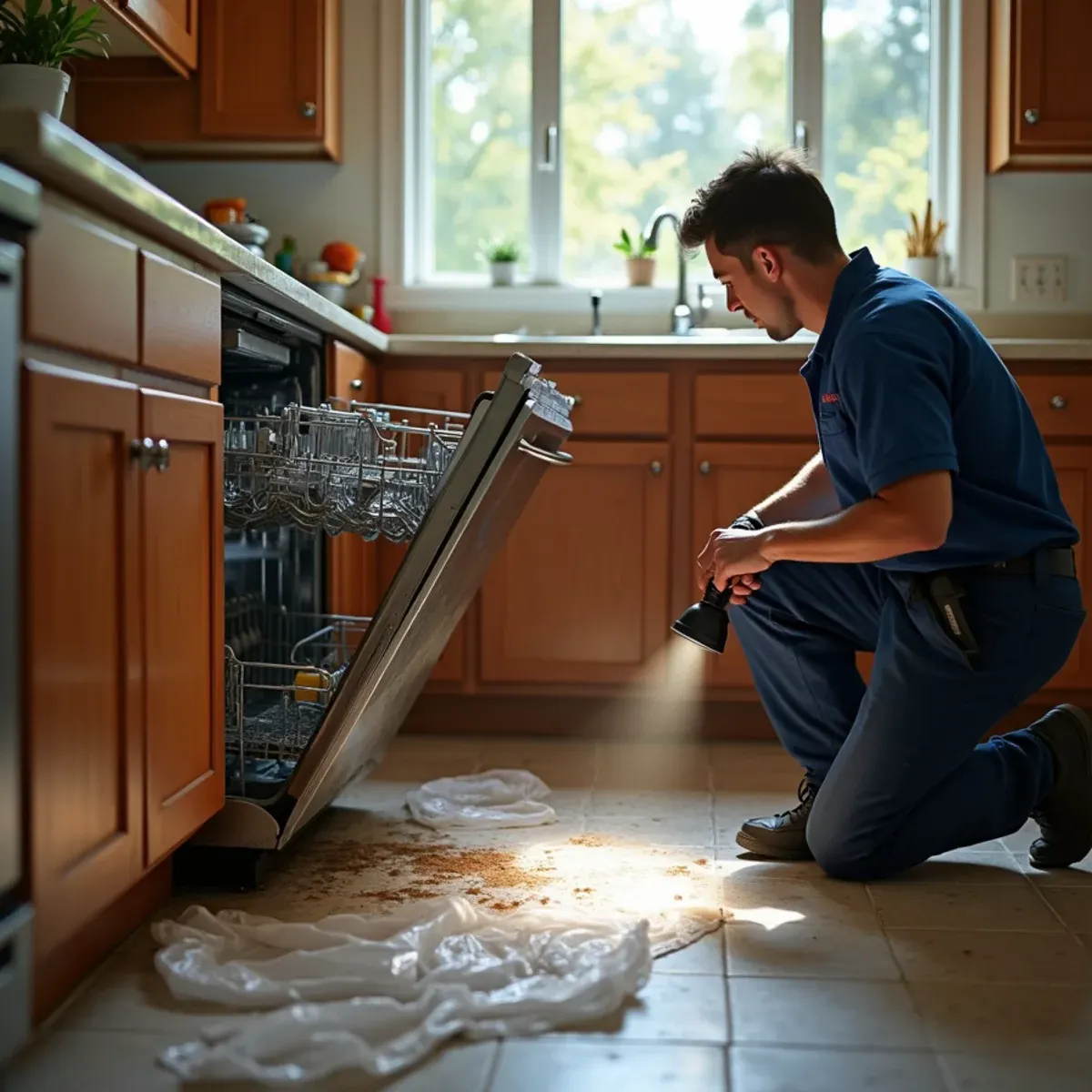
A concrete slab normally gives up some moisture downward, into the soil beneath it. In Pico Rivera it does not get much help. The city was built on the strip of ground between the San Gabriel River and the Rio Hondo, and the water table under that strip sits high, so the soil below your floor is often already carrying more moisture than the slab would like to release into it. When a water heater or a dishwasher wets that slab, nearly all of the drying has to happen upward into air we control. Plan on more equipment and more days.
It complicates the readings, too. The housing here went in fast between 1945 and 1965, slab floors with galvanized supply lines, and a lot of it now has vinyl plank or sheet goods laid straight over concrete with no real vapor barrier. A meter can show a damp slab that was damp long before your washer failed. We take baseline readings in a dry part of the same floor before deciding what belongs to your loss, which matters when an adjuster asks what we are drying and why. Cypress is twenty minutes southeast.
What Pico Rivera Changes About Appliance Leaks
1Slabs that only dry upward
With a high water table under the whole city, we cannot count on the ground taking moisture away, so the dehumidification has to do all of it. That usually means larger equipment and a longer run than the same appliance failure would need on higher ground. We would rather set one more dehumidifier on day one than pull equipment at day three and get called back when the flooring adhesive fails.
2Baseline readings before we scope
Before we call a slab wet we read a comparable dry area of the same floor, ideally in a room the water never reached. That gives us the house's normal number rather than a textbook one. In Pico Rivera those baselines run higher than most cities we serve, and using them keeps us from over-scoping a claim, which is exactly the kind of thing that gets a scope questioned later.
3Floating floors laid over uncovered slab
Vinyl plank and laminate went into a lot of these houses directly over the original slab. Appliance water travels under the planks along the whole floor and cannot evaporate through them, so a kitchen leak shows up as a soft, hollow-sounding spot in a bedroom. Enough of the floor has to come up to expose the slab, and click-lock plank rarely reinstalls cleanly once the edges have swollen.
How the Work Runs
The method is the same one we use on every appliance leaks job, documented to the IICRC S500:2025 standard. Here it is in short — the full appliance leak water damage cleanup process explains each stage in detail.
- Isolate the supply
- Pull the appliance and read behind it
- Open cabinet bases where needed
- Extract and remove unsalvageable material
- Targeted drying of the enclosed spaces
- Rebuild and reinstall
The Pico Rivera Background Worth Knowing
On a hillside, storm water leaves. In Pico Rivera it soaks in, and when the soil is already near capacity it stops soaking in and simply stands. That is why a yard here can hold water two days after the rain stops while a yard up in the Whittier hills is dry by morning. The lawn is not draining badly. The ground underneath it is full. Once that happens, every path water can take toward your house becomes the path it takes: the garage threshold, the slider track, the gap where a patio slab has settled back toward the wall.
There is more on the housing stock, drainage and plumbing history of this city on our water damage restoration in Pico Rivera page.
Pico Rivera at a glance
- Dominant construction era
- 1945–1965
- Foundation type
- slab on grade
- Supply piping found here
- original galvanized steel, copper
- Drain line materials
- cast iron
- Terrain and water table
- flat, shallow water table
- Most common local failure
- ground saturating fast during sustained storms because the water table between two channels sits high
- Highest-value local prevention
- clearing area drains and confirming downspouts discharge well away from the foundation
What It Costs in Pico Rivera
We do not quote a number over the phone before seeing the property — anyone who does is guessing. The variables that actually move the price on a appliance leaks job are slow leak versus sudden failure, how much cabinetry is affected, subfloor condition, and they are broken down in full on the appliance leak water damage cleanup page. The assessment and the written estimate are free anywhere in Pico Rivera, day or night, with no obligation.
Appliance Leaks Questions from Pico Rivera Homeowners
On a typical appliance loss, three to five days, and here it more often runs to the longer end. The ground moisture between the two channels means the slab releases water slowly, and a floating floor over that slab slows it further. We take readings every day and pull equipment when the affected materials reach the same numbers as the unaffected areas, which is the standard under IICRC S500:2025, not when a fixed number of days has passed.
Yes. Dishwasher leaks run backward and sideways under the unit into the cabinet bases and subfloor, which is why the visible floor often looks untouched. A free moisture reading takes twenty minutes and will tell you definitively whether anything behind or beneath is wet.
Often only the affected base or toe-kick, not the whole box. Particleboard bottoms that have swollen and delaminated have to be replaced, but the cabinet frame, doors, and countertop can usually stay. We repair at the smallest reasonable scope.
Not in the way people picture it. The channels are engineered, and what we actually see is a groundwater and surface drainage problem rather than a channel overtopping. Because the water table between the two runs high and the ground is flat, soil here reaches saturation faster than it does a few miles inland. Once it does, storm water stops soaking in and starts looking for the lowest opening in your house, which is almost always the garage.