
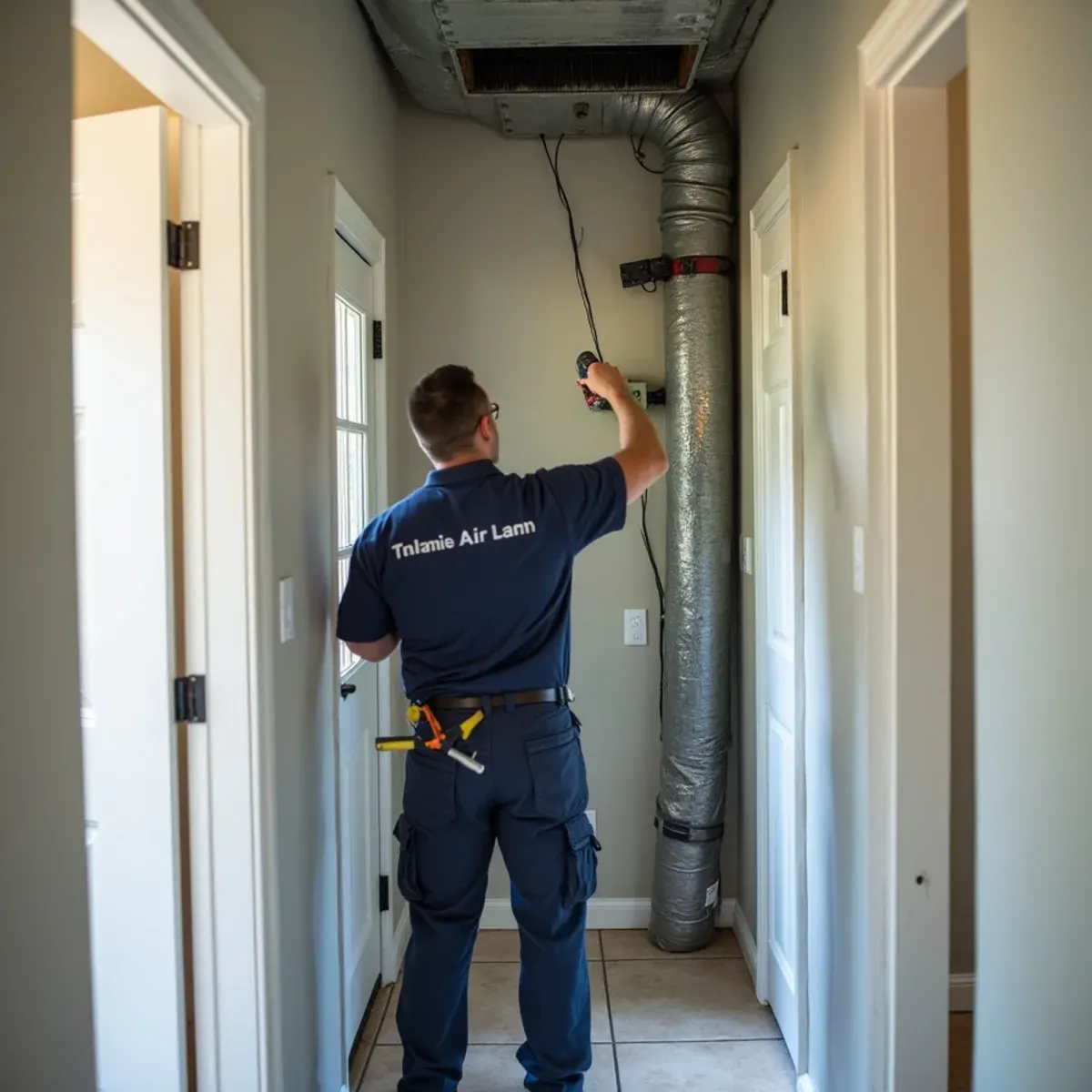
Salt does the damage here that age does elsewhere. In Huntington Beach the condenser fins, the sheet metal screws in a plenum and the flashings around roof and window openings all corrode years faster than they would inland. That last one matters most for duct work. When wind-driven rain finds a failed flashing, the water goes into the attic and lands on the flex run, not on your floor. Homeowners find it months later as a stain, or as a smell every time the fan starts up.
Stock is mostly 1960 to 1990 on slab, with the water table shallow across the flats. Huntington Harbour adds waterfront and canal-front homes with tidal groundwater and seawalls, and enough humidity to keep anything damp damp. Downtown is the opposite problem: narrow lots with no driveway, so hoses, replacement ducting and equipment travel a long way from wherever a truck can legally sit. None of that is a reason to skip the job. It is a reason to plan the day before starting it.
What Huntington Beach Changes About Air Ducts & HVAC
1Wind-driven rain reaches the attic first
Storms come off the water sideways here. Corroded window head flashing and roof-to-wall transitions let water in above the ceiling line, where it soaks insulation and the duct jacket and drains along the run to the lowest boot. Nothing shows on the ceiling until the material is thoroughly saturated. When we are called for a stain, we track the run uphill from it rather than starting at the drywall.
2Harbour humidity slows every dry-out
On the canals and near the water the air is wet and the ground is wetter. Duct that would air-dry in a day inland stays damp, so we run sealed dehumidification and monitor readings rather than assume a schedule. We also check the outdoor unit and the coil, because salt-pitted fins and a corroding drain pan keep condensate in the system after everything else reads dry.
3Downtown lots without a driveway
On the numbered streets a truck may end up a hundred feet from the front door, with nowhere to stage duct material. That is a scheduling and permit question rather than a technical one, but it sets the length of the day. We line up parking, protect the walk-in path through the house, and bring material in cut to size instead of working on a public sidewalk.
How the Work Runs
The method is the same one we use on every air ducts & hvac job, documented to the IICRC S500:2025 standard. Here it is in short — the full air duct cleaning & hvac restoration process explains each stage in detail.
- Inspect before we quote
- Contain and seal the system
- Clean or replace the ducting
- Clean the air handler and coil
- Replace filters and treat surfaces
- Seal, balance, and verify
The Huntington Beach Background Worth Knowing
Salt does not damage buildings directly. It damages the details that keep water out, and then water does the rest.
There is more on the housing stock, drainage and plumbing history of this city on our water damage restoration in Huntington Beach page.
Huntington Beach at a glance
- Dominant construction era
- 1960–1990
- Foundation type
- slab on grade
- Supply piping found here
- under-slab copper
- Drain line materials
- cast iron, ABS
- Terrain and water table
- coastal-flat, shallow water table
- Most common local failure
- wind-driven rain entering through salt-corroded window flashing and failed exterior sealant
- Highest-value local prevention
- renewing exterior caulking and flashing on a far shorter cycle than inland guidance suggests
What It Costs in Huntington Beach
We do not quote a number over the phone before seeing the property — anyone who does is guessing. The variables that actually move the price on a air ducts & hvac job are cleaning versus replacing flex duct, number of supply runs and returns, what kind of contamination it is, and they are broken down in full on the air duct cleaning & hvac restoration page. The assessment and the written estimate are free anywhere in Huntington Beach, day or night, with no obligation.
Air Ducts & HVAC Questions from Huntington Beach Homeowners
Usually not, and we would rather tell you now than argue about it later. Corrosion from coastal air is wear, not a sudden loss, and carriers treat it that way. What is claimable is what the water event did: soaked duct and insulation, a contaminated coil and blower, a plenum that took on water. We photograph and separate the two in the scope so the claimable work is not held up by a fight over the condenser.
Fair question, and often it is an upsell. The honest answer depends on whether contamination actually reached the system. If the HVAC ran during the loss or the demolition, if water got into the attic where the ducting lives, or if the loss involved sewage or fire, the system is in scope. If none of that happened, it probably is not. We run a camera and show you before you decide anything.
It depends on where the moisture is. If the inner liner got damp and the fiberglass behind it stayed dry, cleaning and drying the run works. If water got through a torn jacket into the insulation, that fiberglass is porous, it holds moisture and growth, and there is no reliable way to clean it or verify it is clean. Those runs get replaced. We show you which is which rather than guessing on your behalf.
Ambient humidity near the coast stays high enough for long enough that materials dry slowly on their own, which widens the window in which growth can establish after any moisture event. Combined with salt-accelerated failures of exterior sealants and flashings, coastal homes simply get more moisture intrusion and dry from it more slowly.