
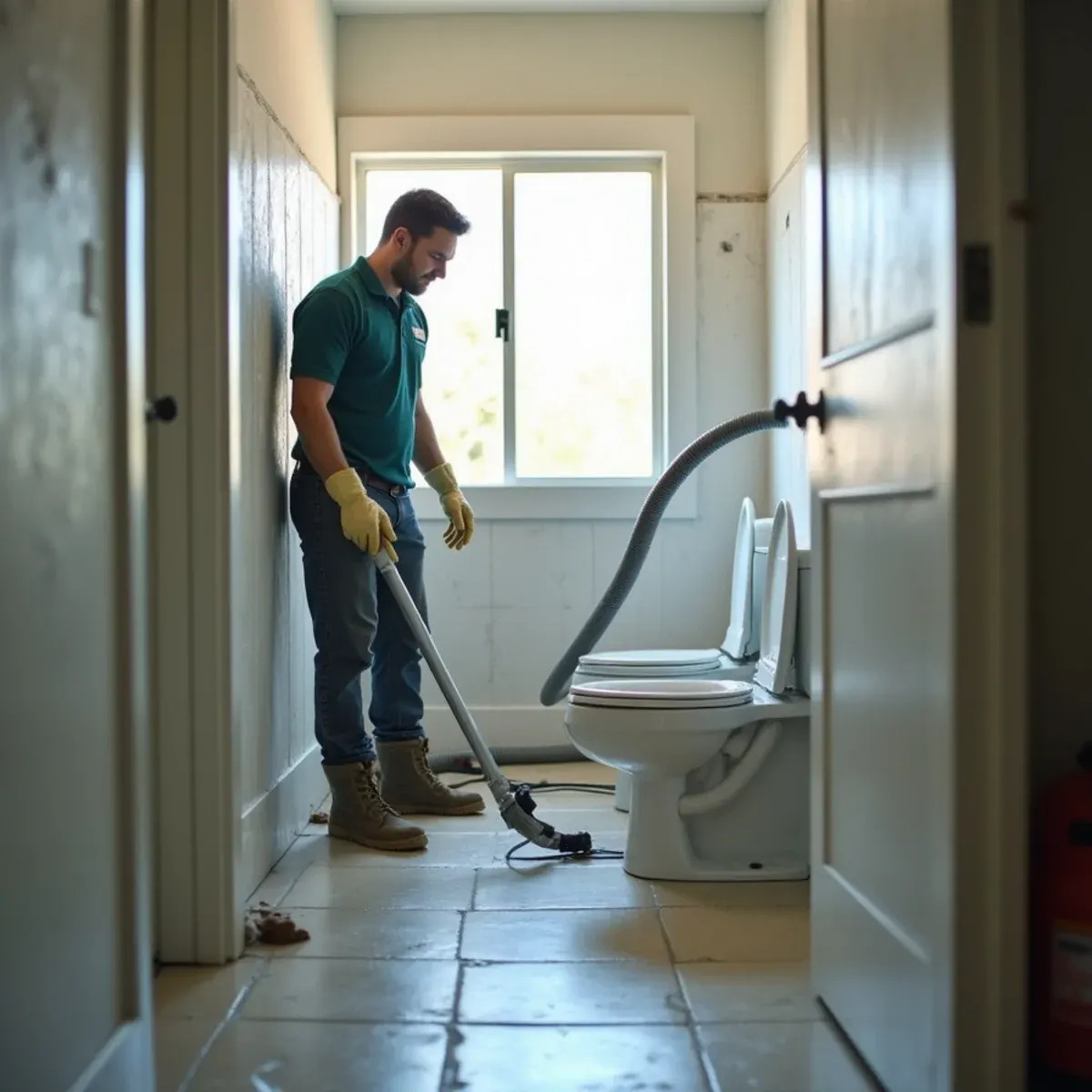
On a downtown Huntington Beach lot there is often nowhere to put the truck. Twenty-five foot lots, no driveway, alley access if you are lucky. The extraction hose runs a long way and equipment gets carried rather than rolled. That matters more than it sounds, because the first hour of a toilet overflow is extraction, and every extra foot of hose costs lift. We work the route out on arrival instead of discovering the problem halfway through, and on the tight streets off Main we will run from the alley when that is the shorter path to the bathroom.
The rest of the city is 1960s through 1990s slab, with a shallow water table and a marine layer that keeps outdoor humidity high most mornings. That lengthens drying, so we run closed-system dehumidification rather than opening windows and hoping the day turns. In Huntington Harbour the homes go two and three stories over waterfront lots with tidal groundwater behind the seawalls, and an upper-floor overflow there drops into a framed assembly instead of spreading flat. On every upper-floor toilet we service in this city, the flange and wax ring get inspected before the fixture goes back.
What Huntington Beach Changes About Toilet Overflow
1Long hose runs on downtown lots
The narrow-lot grid south of Main has no driveways and limited street parking, which puts the truck well away from the bathroom. Longer hose means reduced extraction lift, so we compensate with portable units carried inside and stage the truck-mount for the bulk work. Knowing this before we arrive is why we ask about parking and alley access on the phone.
2Marine air lengthens every dry-out
Coastal Huntington Beach mornings run humid enough that opening a window during drying actively works against you. We seal the chamber and run refrigerant or desiccant dehumidification depending on the load, and we plan for more equipment days than the same square footage would need inland. Anyone promising a fixed two-day dry-out within a mile of the water is guessing.
3Huntington Harbour multi-story bathrooms
The waterfront and canal-front homes stack bathrooms over living space, and the lower level often sits close to tidal groundwater behind a seawall. An upper-floor overflow travels the floor framing and drops well away from the source, while the lowest level already carries background moisture. Both facts have to be in the drying plan or the readings will not make sense.
How the Work Runs
The method is the same one we use on every toilet overflow job, documented to the IICRC S500:2025 standard. Here it is in short — the full toilet overflow cleanup process explains each stage in detail.
- Stop the water, stabilize the room
- Determine the category before scoping
- Extract, then remove only what must go
- Pull the toilet, inspect the flange
- Dry the subfloor and the ceiling below
- Disinfect to category, verify, reset
The Huntington Beach Background Worth Knowing
Salt does not damage buildings directly. It damages the details that keep water out, and then water does the rest.
There is more on the housing stock, drainage and plumbing history of this city on our water damage restoration in Huntington Beach page.
Huntington Beach at a glance
- Dominant construction era
- 1960–1990
- Foundation type
- slab on grade
- Supply piping found here
- under-slab copper
- Drain line materials
- cast iron, ABS
- Terrain and water table
- coastal-flat, shallow water table
- Most common local failure
- wind-driven rain entering through salt-corroded window flashing and failed exterior sealant
- Highest-value local prevention
- renewing exterior caulking and flashing on a far shorter cycle than inland guidance suggests
What It Costs in Huntington Beach
We do not quote a number over the phone before seeing the property — anyone who does is guessing. The variables that actually move the price on a toilet overflow job are the category of the water, how far it traveled from the base, what your floor is built from, and they are broken down in full on the toilet overflow cleanup page. The assessment and the written estimate are free anywhere in Huntington Beach, day or night, with no obligation.
Toilet Overflow Questions from Huntington Beach Homeowners
Not near the water in Huntington Beach. Outdoor humidity along the coast frequently sits higher than the air we have already conditioned inside the drying chamber, so opening a window pushes moisture back into the structure and stalls the job. We keep the affected area sealed and control it with dehumidification, then vent when the outside air is genuinely drier. Marine influence is the main reason coastal dry-outs here take longer than inland ones of the same size.
Clear water lowers the health risk, not the drying requirement. Clean water still soaks into carpet pad, particle board, and the cut edge of subfloor around the flange, and it still causes swelling and mold growth if it stays. What clean water does change is the scope: no containment, no PPE, usually no demolition. If it stayed on sealed tile and you got it up quickly, you may genuinely be fine. If it reached anything porous, it needs real drying.
Three checks. Did the water rise in the bowl without anyone flushing it? Does another fixture gurgle, drain slowly, or fill up when you run water elsewhere in the house? Is there visible soil or a sewer odor in what came out? Any one of those points at the main line. A stuck fill valve, by contrast, gives you clear water, a bowl that overflows steadily, and a tank you can hear running continuously.
Ambient humidity near the coast stays high enough for long enough that materials dry slowly on their own, which widens the window in which growth can establish after any moisture event. Combined with salt-accelerated failures of exterior sealants and flashings, coastal homes simply get more moisture intrusion and dry from it more slowly.