
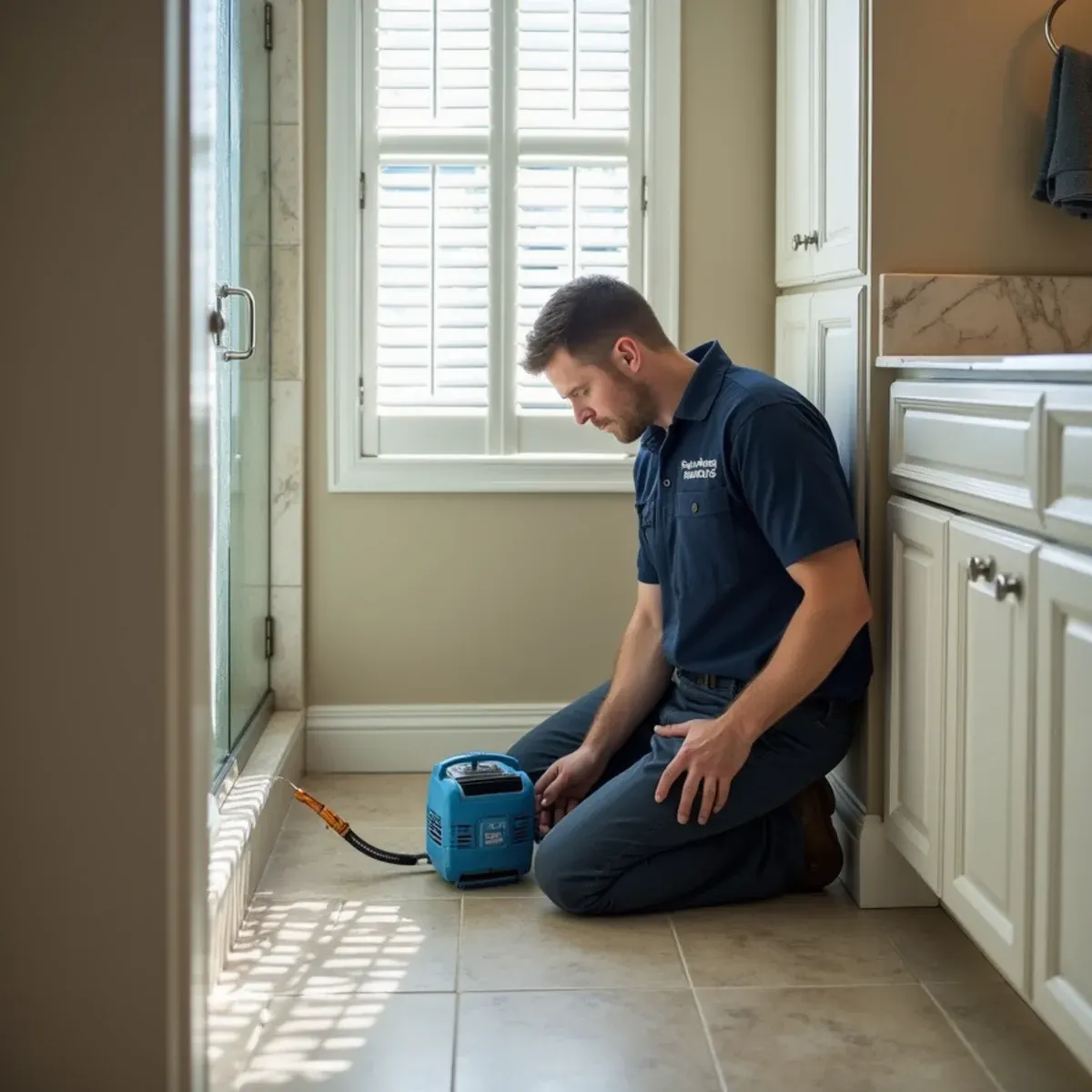
The advice that saves La Habra homeowners the most money is boring: do not let anyone cut your slab until the shower pan has been flood-tested. This city built out from about 1950 to 1980 on slab, and the under-slab copper in those tracts is old enough that slab leaks are a genuine and frequent problem. That is exactly why bathroom leaks get misdiagnosed here. A failed pan liner, a cracked curb or a leaking toilet flange produces a damp floor and a stained wall base that looks like the copper below. The test costs an afternoon. The concrete cut does not come back.
La Habra also sits on gently rolling ground at the head of the Coyote Creek watershed, the same creek that runs past our Katella Avenue base in Cypress, and it straddles the Orange County line with La Habra Heights in LA County just above. That rolling terrain plus fifty years of added patios, planters, raised beds and driveway extensions means a lot of houses now have exterior water steered back toward the foundation. When a wall goes damp near a bathroom, we look at both directions — inside the wet wall and outside the grade — before we call it plumbing.
What La Habra Changes About Shower Pan Leaks
1Flood test before slab cutting
We plug the drain, fill the pan, and let it stand while the house supply is shut off and pressure is monitored. That single sequence separates a failed pan from failing under-slab copper. In La Habra both are plausible on the same house, and knowing which one you have determines whether you are hiring a tile crew or a plumber with a concrete saw.
2Added hardscape redirecting water
Decades of patio pours, planter walls and widened driveways on these rolling lots have changed where storm water goes. Water that used to run past the house now collects against it. When we find a damp wall adjoining a bathroom, we walk the exterior and check the grade at that wall. Fixing a shower and leaving a planter draining into the foundation gets you a second call in January.
3Rolling grade moves the evidence
Because La Habra is not flat, water leaving a pan on a settled slab travels toward the low side of the house rather than staying in the bathroom footprint. We moisture-map the adjacent rooms and hallway and work from the wettest reading back to the source, instead of opening the wall where the stain happens to be visible.
How the Work Runs
The method is the same one we use on every shower pan leaks job, documented to the IICRC S500:2025 standard. Here it is in short — the full shower pan & bathroom leak repair process explains each stage in detail.
- Map the moisture first
- Flood test the pan
- Isolate the actual failure
- Open only what has to open
- Dry the structure to standard
- Rebuild the waterproofing correctly
The La Habra Background Worth Knowing
Copper is good pipe. What it is not is immortal, and the way it went in during this era shortened its life. Soft copper tubing was laid in the sand under the slab before the pour, sometimes in direct contact with aggregate, often with tight bends that thinned the wall on the outside of the curve. Add fifty to seventy years of water moving through the inside and soil chemistry working on the outside, and it develops pinholes. The hot line almost always goes first, because heat accelerates every part of that process.
There is more on the housing stock, drainage and plumbing history of this city on our water damage restoration in La Habra page.
La Habra at a glance
- Dominant construction era
- 1950–1980
- Foundation type
- slab on grade
- Supply piping found here
- under-slab copper, galvanized steel
- Drain line materials
- cast iron
- Terrain and water table
- rolling, moderate water table
- Most common local failure
- under-slab copper failures in 1960s tract housing, plus drainage that decades of added hardscape has redirected
- Highest-value local prevention
- watching where water actually runs during the first storm, because the ground here is not flat
What It Costs in La Habra
We do not quote a number over the phone before seeing the property — anyone who does is guessing. The variables that actually move the price on a shower pan leaks job are how long the shower kept running, what sits under the shower floor, whether the framing is compromised, and they are broken down in full on the shower pan & bathroom leak repair page. The assessment and the written estimate are free anywhere in La Habra, day or night, with no obligation.
Shower Pan Leaks Questions from La Habra Homeowners
It is worth an afternoon, yes. Slab leaks are real here and the copper under these 1950s to 1970s tracts is at that age. But a failed shower pan gives you the same warm damp floor and the same wall staining, and we have flood-tested pans that bled visibly while the house held pressure perfectly. If the pan holds and pressure drops, the plumber is right and you have lost nothing but a few hours. If the pan bleeds, you have saved a slab.
Timing is the cleanest clue. A pan leak only produces water when the shower is running, so the symptom appears within hours of use and dries out between uses. A pressurized supply line leaks around the clock, and the damage grows steadily whether anyone is home or not. Shut off every fixture and watch the water meter's low-flow indicator. If it still moves, you have a supply leak, not a pan. We confirm it with a flood test either way.
Sometimes, and we will tell you honestly which case you are in. A leak at the drain clamping ring, or a failed seal where the surround meets the pan, can occasionally be handled with a limited opening. A split or perforated liner cannot. Liquid-applied products sold as pan sealers can buy a few months on a pinhole, but they will not repair a membrane that has failed at a fold or a corner, and we are not going to sell you that as a fix.
Do a meter test. Shut off every fixture and the irrigation, note the leak indicator, and check it again a few hours later with nobody using water. If it moved, something is losing water. In 1960s La Habra tract homes that is most often the hot line under the slab, and the giveaway is a warm patch of floor or the sound of water running behind a closed system.