
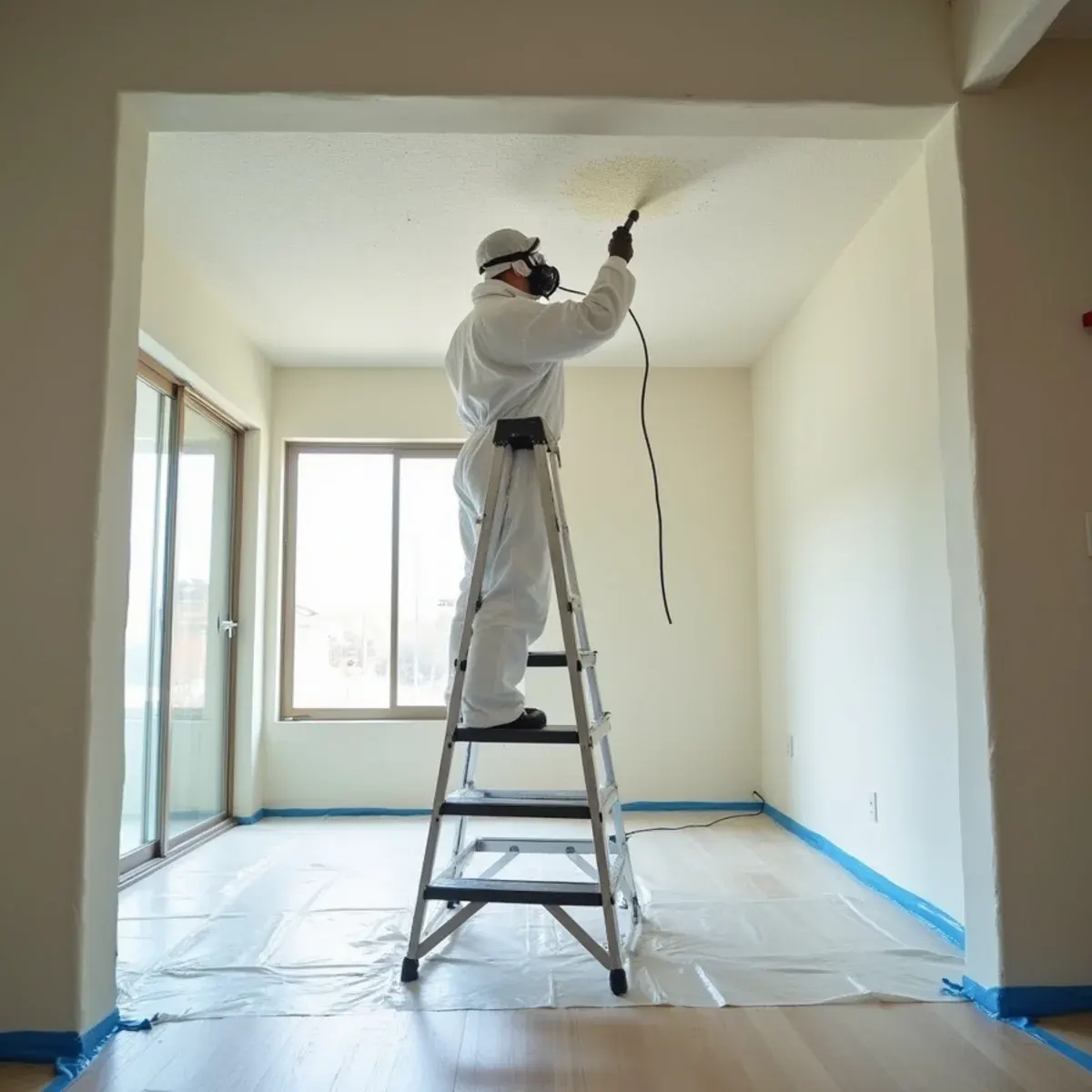
Straight answer first: a lot of Yorba Linda does not need this. The city built out mostly between 1970 and 2005, and a house finished in 1988 on an engineered pad above Yorba Linda Boulevard has no lead paint and no asbestos ceiling texture. We are not going to sample it to pad an invoice. Where this service does apply is the earlier end — the 1970s tracts that beat the 1978 lead cutoff, and anything built before the asbestos building materials phased out in the early 1980s.
That matters because the water here mostly arrives from outside. Failed terrace drains, saturated slopes behind retaining walls and heavy irrigation on large lots push water at the back of the house rather than out of a pipe. Parts of the city sit inside the 2008 Freeway Complex Fire footprint, where burn-scar runoff behaved differently for years afterward. The repairs that follow are lower-wall and subfloor work, and if the house dates to the first wave of building, that lower wall is where the older joint compound is.
What Yorba Linda Changes About Asbestos & Lead Testing
1Build date, not neighborhood, decides
A hillside address and a large lot tell us nothing about materials. The 1970s tracts closer to the old town center and the newer ridge developments look similar from the street and are decades apart in what they contain. We check the year of construction before quoting any sampling, and on post-1980 homes the recommendation is usually no testing at all.
2Slope repairs rarely disturb regulated materials
Most of what fails here is exterior — terrace drains, subdrains, retaining wall weeps. Digging out a failed drain line on a slope does not touch ceiling texture or painted trim. The testing conversation only starts once water has come inside and interior demolition is on the table, which on a hillside loss is often limited to a single wall in one room.
3Older equestrian-area outbuildings are the exception
Barns, tack rooms and older sheds along the trail system sometimes predate the houses around them, and agricultural buildings kept using transite panel and asbestos roofing longer than homes did. If a loss involves one of those structures rather than the main residence, the answer flips and we sample before anything gets cut.
How the Work Runs
The method is the same one we use on every asbestos & lead testing job, documented to the IICRC S500:2025 standard. Here it is in short — the full asbestos & lead paint testing process explains each stage in detail.
- Emergency stabilization without cutting
- Define exactly what gets disturbed
- A certified inspector takes the samples
- Independent laboratory analysis
- Lead assessment on painted surfaces
- Abatement, clearance, then restoration
The Yorba Linda Background Worth Knowing
A hillside lot in Yorba Linda is a drainage system with a house attached. Terrace drains cut across the face of the slope to intercept water before it gains speed. Brow ditches run along the top to keep runoff from ever reaching the slope face. Down-drains carry the collected water to the street or a storm connection. Retaining walls have weep holes and, behind them, a gravel subdrain that relieves pressure on the wall. Every one of those was engineered as part of the pad. Every one of them silts up, roots over, or gets buried by landscaping.
There is more on the housing stock, drainage and plumbing history of this city on our water damage restoration in Yorba Linda page.
Yorba Linda at a glance
- Dominant construction era
- 1970–2005
- Foundation type
- slab on grade
- Supply piping found here
- under-slab copper, later PEX and CPVC
- Drain line materials
- ABS, cast iron
- Terrain and water table
- hillside-mixed, deep water table
- Most common local failure
- exterior water from failed slope drainage, terrace drains and retaining-wall systems rather than from plumbing
- Highest-value local prevention
- clearing terrace and slope drains before the season, since a blocked one turns an engineered hillside into a funnel
What It Costs in Yorba Linda
We do not quote a number over the phone before seeing the property — anyone who does is guessing. The variables that actually move the price on a asbestos & lead testing job are the number of distinct materials, how many samples each needs, how fast you need results, and they are broken down in full on the asbestos & lead paint testing page. The assessment and the written estimate are free anywhere in Yorba Linda, day or night, with no obligation.
Asbestos & Lead Testing Questions from Yorba Linda Homeowners
For lead, yes — 1978 is the cutoff and 1976 is inside it, so any paid work disturbing painted surfaces falls under lead-safe rules unless testing clears them. For asbestos, a 1976 build is late but not clear; ceiling texture and sheet vinyl from that year can still come back positive. Two or three samples settle it. On a 1990s Yorba Linda house we would tell you to skip the whole thing.
No, and that's the whole point of testing. Plenty of ceilings from that decade come back clean — the manufacturers were mixed, the formulas changed year to year, and two houses on the same street can give different results. What we can't do is assume either way. A 1974 ceiling is a suspect material, which means one sample and a lab report separates a routine repair from a regulated one. Guessing in either direction is the expensive choice.
Usually less than people fear, and we design around it. Extraction, containment and dehumidification all start on the first visit, because none of that disturbs a suspect material. Sampling happens the same day where we can get an inspector out, and rush lab analysis is available when the clock matters. What genuinely adds time is a positive result, since abatement, containment and clearance testing have to finish before we cut. We'll give you a realistic date rather than an optimistic one.
Seeping from the weep holes is usually the wall doing its job, relieving water pressure from the soil behind it. The concerning version is the opposite: weep holes that stay dry through a storm while the ground above stays soggy, which suggests the subdrain behind the wall is plugged and pressure is building. Also watch for new cracking, bulging, or a wall that has tipped slightly. Those are engineering questions rather than restoration ones, and we will say so.